[Editor’s note: The report mentioned here is from an inspection conducted on December 2 and may not represent the future health inspection status of the food establishment.]
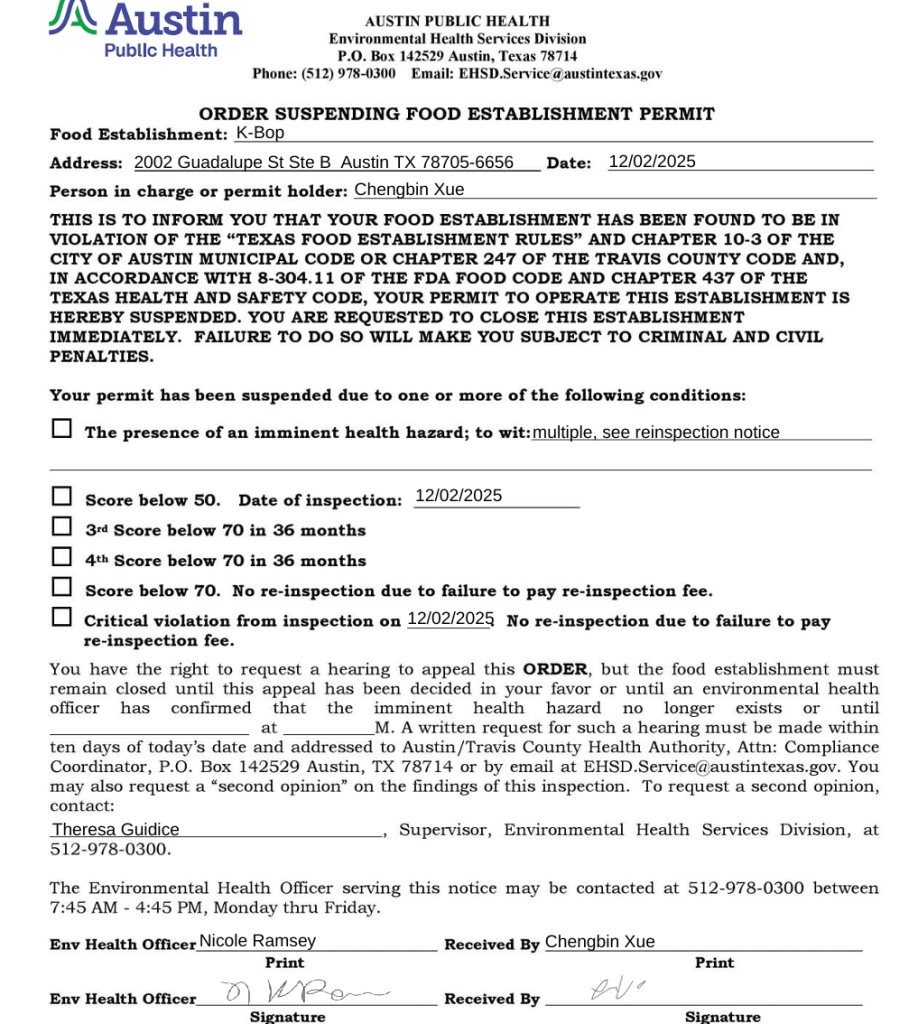
On December 2, a routine health inspection at K-Bop revealed several compliance issues. The assessment revealed the restaurant did not adequately sanitize its equipment and utensils, and saw evidence of rodents and flies, among other violations.
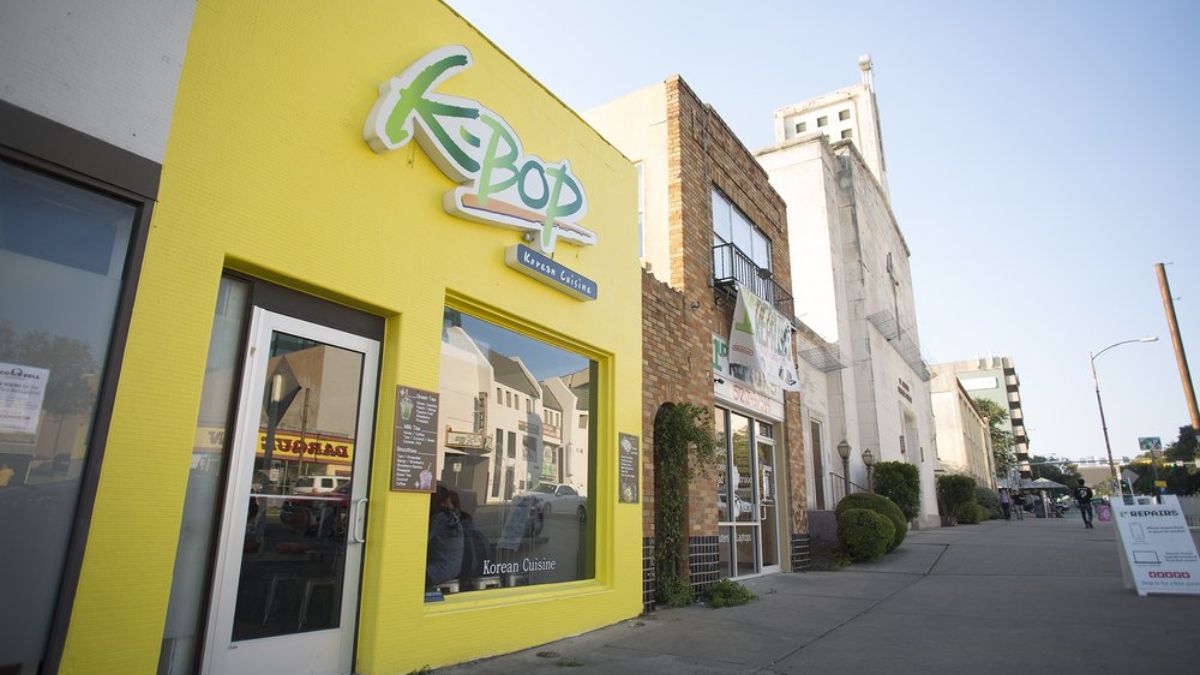
K-Bop

- When: December 2, 2025
- Where: 002 Guadalupe St b, Austin, TX 78705
- Score: 57
K-Bop is a Korean spot located on the UT campus. The eatery, known for bowls and Korean-style rolls, caters to students with its low-priced offerings. According to the report, the restaurant violated multiple food-safety codes, including:
- The establishment was found operating with no valid permit, despite prior notice in October. A change-of-ownership application from July remained incomplete, the report said.
- The person in charge could not provide a valid food protection manager certificate.
- The hand sink was inaccessible, soap and utensils were found at a non-handwashing sink; no designated sink was available near prep and warewashing areas; and required paper towels were missing. One hand sink also failed to reach the required 100°F hot water temperature.
- Moldy jalapeños and cabbage were stored on the floor with rodent droppings. A bag of carrots full of fruit flies was also noted.
- Food-contact surfaces such as knives were visibly dirty, and no sanitizer was present in the warewashing sink.
- Heavily dented cans were found and voluntarily discarded.
- Eggs and pork were improperly hot-held, while raw meats, tofu, kimchi, and beef were stored at unsafe temperatures for over four hours.
- Prepared foods held longer than 24 hours weren’t date-marked
- Undercooked eggs and tuna were not properly identified on the menu.
- RAID and other home-use insecticides were stored or applied in non-compliant ways.
- Excessive rodent droppings and fruit flies were noted in storage areas. Openings such as gaps around the restroom AC and a missing rear door knob allowed potential pest entry.

- Buckets of kimchi, raw meats, vegetables, and boxes of noodles were stored below the required 6-inch elevation. Uncovered foods were also noted in coolers.
- Wiping cloths were reused without sanitizer. Scoops lacked handles or were stored with handles touching food, including in the ice machine.
- Clean items were stored and it blocked self-draining, the report said.
- A rear refrigerator was not holding food at 41°F. Other equipment had non-cleanable surfaces like cardboard liners, tape, and worn containers.
- Hood vents, towel dispensers, wire racks, and cooler interiors were seen with heavy debris buildup.
- No hot water was available throughout the establishment.
- Instead of draining into an approved plumbing fixture, mop water was discarded on the back steps.
- Outdoor refuse areas lacked drain plugs, had improper ground surfaces, and dumpster lids were left open.
- Mops were not stored for air-drying.
- Floors, walls, and ceilings were broken, soiled, or difficult to clean. Rodent droppings and standing water were noted in the basement.
- Hood and air vents had heavy buildup and needed repair or cleaning.
A detailed report is available online.
Follow-up Inspection
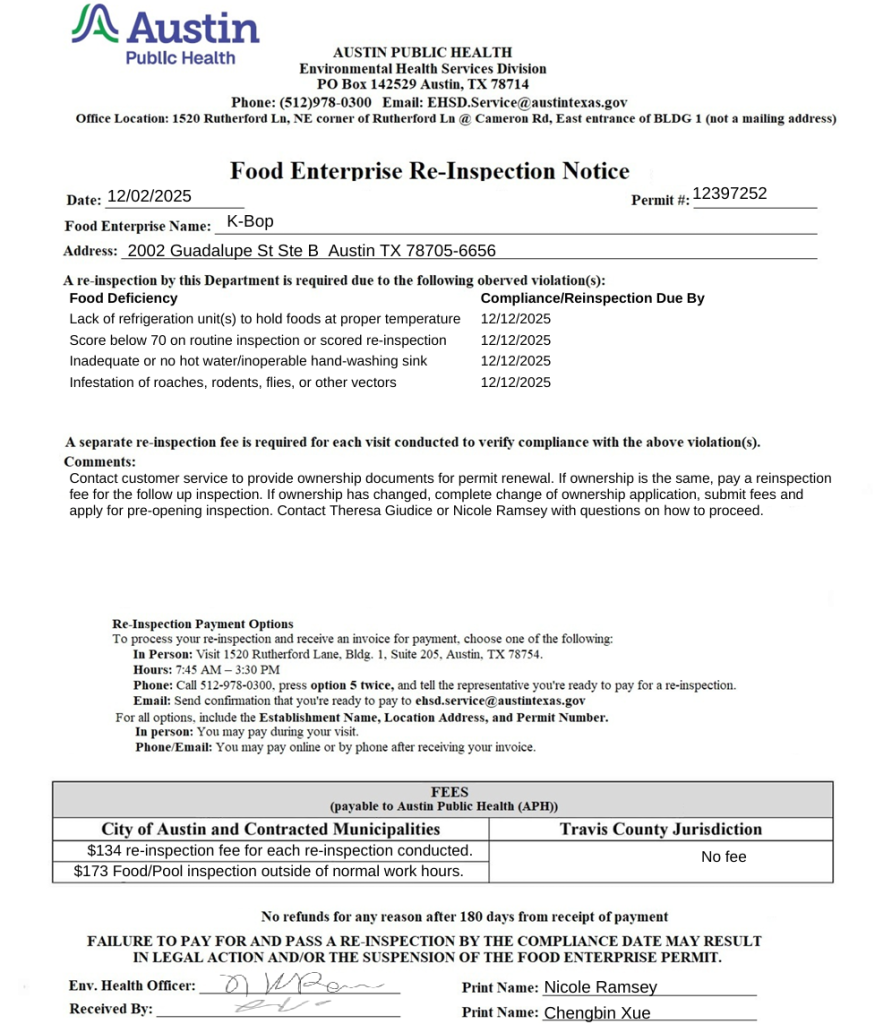
As per the report, any establishment that scores below 70 will have to undergo a reinspection in 10 days. Failure to score 70 or above will result in suspension of the food establishment permit, additional fees, or legal action.