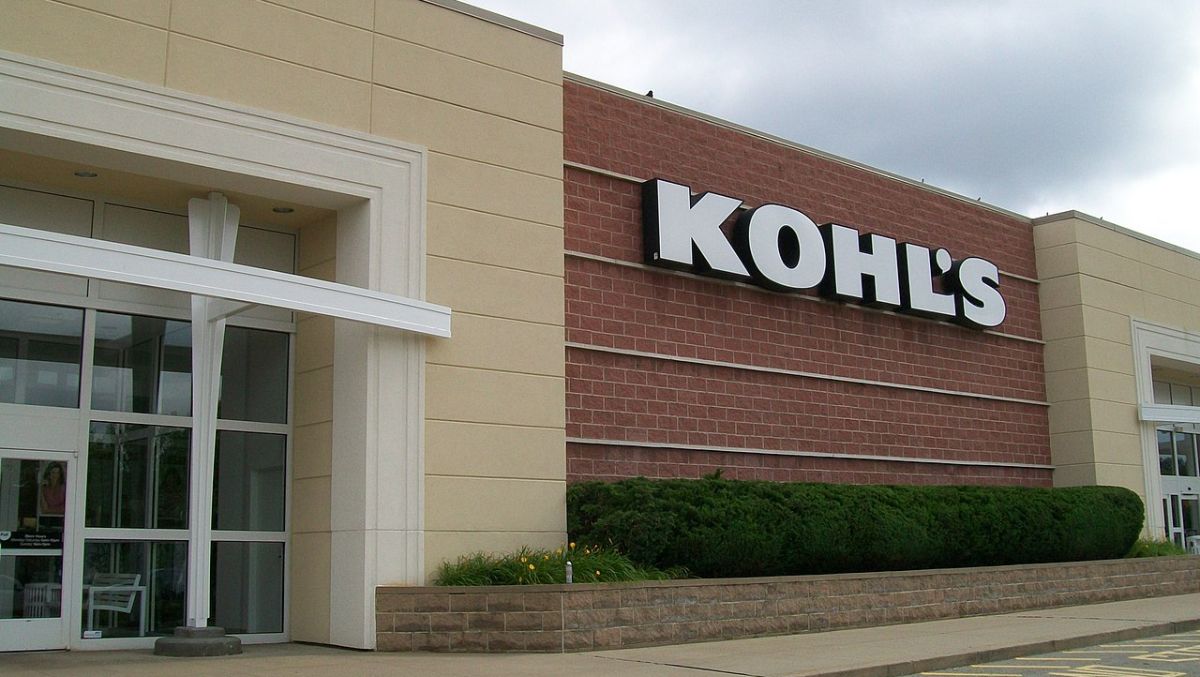
Kohl’s Corporation, the 63-year-old omnichannel retailer, is on the move with its multi-year turnaround strategy to improve margins, curb losses, optimize the gigantic inventory, in a bid to effectively revamp the business.
Headquartered in Menomonee Falls, Wisconsin, Kohl’s closed more than two dozen underperforming stores in 2025 as part of a broader long-term strategy.
Store Closures: A Survival Strategy
Now, a Kohl’s store in Sault Ste. Marie city, Michigan has closed after extending a 50% discount in a clearance sale to minimize the inventory. The decade-old store is the latest victim of Kohl’s reorganization efforts.
“It is with a heavy heart we have to inform our community that the Sault Sainte Marie Kohl’s will be closing,” Kohl’s store manager Christopher Herbert said on social media, according to Sooleader. “All sales are final and cannot be returned to any Kohl’s locations.”
Restructuring a business requires careful planning. Kohl’s has maintained a stable footprint, operating more than 1,150 stores since 2012. Despite closing 27 stores in 2025, Kohl’s remains strong across 49 states.
Earlier in 2025, Kohl’s then Chief Executive Officer emphasized that store closure decisions are taken “very seriously” while highlighting that it became a “necessary” step to “support the health and future of our business”.
Before drawing the shutter on 27 stores, the corporation opened a net of 15 new stores in fiscal years 2023 and 2024. Store count optimization has been one of the proven techniques that have aided brands to overhaul profitability as it categorically shrinks a considerable portion of selling, general & administrative (SG&A) expenses – the money utilized on payrolls, inventory management, etc.
Recently, Kohl’s new CEO Michael J. Bender ruled out the possibility of any major change, as far as the network of stores is concerned.
“We have a store base of 1,150 stores roughly that vast majority are well over 90% are profitable. As we look at that store base on an annual basis, we’ll continue from a hygiene perspective to make sure that we believe that those stores are positioned in the right spot and delivering what we need. I would not anticipate any sort of grand plan of saying stores, we’re taking stores out or adding stores at this point,” Bender said in an earnings call after delivering the Q4 FY 2025 results.
Stock Collapse Mirrors Operational Stress
Kohl’s has been heavily hammered by years of subdued sales and a sort of mismanagement. Kohl’s has faced years of challenges, with its stock (NYSE: KSS) losing over 80% of its value in the past five years. Kohl’s shares last traded at $12.03 a piece, down 4.26% from the previous close of $12.56.
Kohl’s stock traded at $61-62 per share during March of 2021. The stock is now trading very close to multi-year lows observed during the pandemic-induced market crash in March-April of 2020. Though the stock staged marginal recovery in 2025, things again turned haywire due to weak quarterly results and tepid guidance.
The Ratings Downgrade
The situation has worsened for Kohl’s after the S&P Global downgraded its rating to ‘B+’ from ‘BB-’ and also lowered the issue-level rating on secured debt to ‘BB’ from ‘BB+’. The Manhattan-headquartered credit ratings agency has cited underperformance, declining revenue and profitability metrics, and leadership changes in quick succession as the key reasons for the downgrade.
“The downgrade reflects our view that Kohl’s business risk profile is weaker than that of peers. Kohl’s net sales declined to nearly $15 billion from the post-COVID-19 recovery peak of $18.4 billion in fiscal 2021, matching what it generated during the pandemic when stores were closed. Kohl’s is still sizable, but prior to the pandemic it generated near $19 billion of revenue annually. This decline over 14 consecutive quarters reflects its strategy misses and financial pressure on its target lower-income demographic,” the S&P Global noted in September 2025.
“The negative outlook reflects that we could lower the rating over the next 12 months if Kohl’s does not reverse its operating performance,” the credit rating agency added.
Back to Basics: Resetting the Product Playbook
Present CEO Bender has also signalled that the company is prioritising its focus on basics during the earnings call.
“By exiting out of unproductive styles and offerings, we can reinvest into higher turning items to drive a more balanced assortment. In our apparel businesses, we’re focused on increasing our investment into our basics while also right-sizing our assortment offering in trending categories,” he said.
With multiple objectives on the card, Kohl’s is required to take measures that can stabilize the sales, margins, and other profitability metrics. Kohl’s has been pursuing a multi-year plan to improve performance.
“The strategy lays out the three key differentiators that will guide the company’s work moving forward: offer the best curated assortment for the whole family, excel at inspiring meaningful moments – big and small, and provide undeniable value,” Kohl’s said in the first Town Hall of 2026.
Cash Gains Offer Hope
Kohl’s has made significant improvements in the FY 2025 as its cash position escalated to $674 million at the end of January 31, 2026, from a meagre figure of $134 at the end of previous fiscal year. The multi-fold growth supplements the broader strategy but the retailer has to maintain its net sales for several quarters to achieve a meaningful comeback.
For the financial year 2026, the company is expecting flat net sales with a de-growth possibility of (2%) as it plans a capital expenditure of between $350 and $400 million.
The substantial improvement in the cash position is largely due to operational performance during the period as Kohl’s managed to decrease its inventory by 7% to $2.7 billion, year-over year.
“We are ending 2025 in a stronger position than we started, with important work still ahead of us. Over the past year, our efforts have been focused on resetting our foundation. This focus is intended to stabilize the business and strengthen our operational ability to build for a stronger future. In 2025, we made meaningful progress, despite our Q4 topline coming in softer than our expectations,” the CEO said in a press release while announcing the results.
Kohl’s debt burden, unstable net sales and subsequent margin erosion have collectively pushed back the retailer in recent years. A judicial inventory management is required to boost cash from operating activities as the business continues to carry a giant-sized inventory as it peaked during 2022-2023, largely due to supply chain hurdles and dislocations.