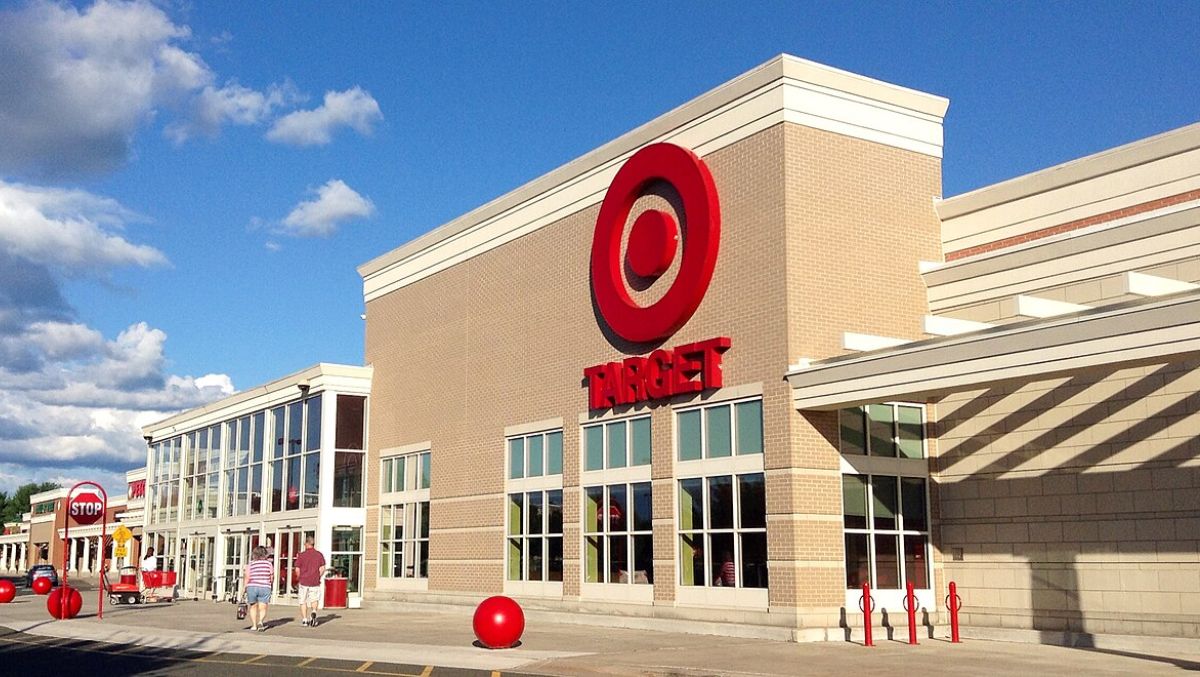
Target Corporation is doubling down with significant investments and new store launches in the current fiscal year to maximize the chances of profitable growth.
The Minneapolis-headquartered retailing giant is moving forward with the largest store updates in a decade, with a focus on improved in-store displays, digital discovery, revamped floor plans, and relevant assortments. The retailer will shift its focus on creating more personalized and joyful experiences for guests, while pushing the initiatives that can help in strengthening loyalty and engagement.
Target’s Next Footprint: 30 New Stores in 2026
With a tactical long-term expansion plan in place, Target is likely to open at least 30 new stores in 2026. The new store additions in the current fiscal year are a part of the retailer’s broader strategy, where it aims to open 300 new stores by 2035.
Target also plans to invest in more than 130 outlets that will undergo full-store remodeling, while it prepares the way for 30 new ones. The primary idea of the corporation is to elevate the guest experience and strengthen key areas of the assortment.
Target’s 2,000th store will open in Fuquay-Varina, North Carolina, by the end of March this year.
Target’s $2 Billion Growth Bet
Target has planned a total of $2 billion in investment in 2026, including $1 billion in operating investment and an additional $1 billion in capital expenditures. The operating investment will be utilized for delivering more consistent and elevated experience, while taking the total capex to nearly $5 billion will assist in the ongoing remodeling of stores, supporting the launch of new stores, improving supply chain and technology.
Target has claimed that hundreds of millions of dollars will be directed to training and additional payroll for the year 2026. This investment is intended to help teams improve a better in-store experience.
Target will have chain-wide in-store enhancements, that includes highlighting new styles, spotlighting top items, etc., while updating the floor plans. On top of this, overall spend on new technology, AI, and brand marketing will increase.
“This new chapter of growth at Target is defined by clear choices and rooted in a deeper understanding of our unique lane in retail, the guests we serve and the areas where we’re distinctly positioned to win,” said Target Corporation CEO Michael Fiddelke.
Target’s 2026 Game Plan
Target is to achieve net sales growth of nearly 2% for the financial year 2026 compared to the previous fiscal. Marginal improvement in the comparable store sales, combined with a growth of one percentage point due to new store additions and non-merchandise sales are likely to support the growth outlook.
Target has said it will increasingly adopt AI to make the shopping experience more personalized. Enhancing the speed and efficiency of same-day fulfillment services will be prioritized which already account for two-thirds of digital sales. Target expects about 20 new metro areas will see next-day brown box delivery by this spring season.
Target Stock Hits 52-Week High, But Not Recovered Fully
Following the Q4 and full year earnings release, Target shares made a new 52-week high in the trade, taking the year-to-date (YTD) gains to over 20%. The stock of Target Corporation (NYSE: TGT) jumped as much as 8.18% in the intraday trades on Tuesday, March 3, 2026, to a 52-week high of $122.43, before settling 6.74% higher at $120.80.
The stock is trading largely unchanged from the year-ago price. The recent gains, alongside a lower denominator has taken the stock in positive territory. However, the stock of Target is yet to recover from the losses incurred between April 2022 and and April 2025.
In the corresponding period, Target offered steep markdowns to clear excess inventory accumulated during Covid-19 pandemic-led supply chain disruptions. The aggressive markdowns to unburden the inventory depleted profit margins, which ultimately dragged the share prices.
Moreover, inflationary hurdles hit Target a little harder than its competitors, including Walmart and Costco, as consumers spent less on discretionary categories like electronics and home decor. Preferential spending on essential items and groceries worked in favor of Walmart and Costco, while Target suffered.
Between April of 2022 and 2025, Target lost over 60%, whereas Walmart (NASDAQ: WMT) and Costco (NASDAQ: COST) advanced more than 70%, each.
Target’s Q4 2025 Report Card
Target Corporation posted a net sale of $30.5 billion for the fourth quarter ended January 31, 2026, which was down 1.5% as compared to year-ago sales of $30.9 billion. “Food & Beverage, Beauty and Toys delivered net sales growth in the quarter, with stronger trends in Essentials and Home compared to the third quarter,” Target said while announcing the earnings.
The Q4 comparable sales saw a 2.5% dip, reflecting the combined effect of digital sales improving by 1.9% and comparable-store sales slipping by 3.9%.
During the said period, Target witnessed a 30% growth in marketplace, 25% rise in non-merchandise sales and a membership revenue boost of over 100%, with the Target Circle 360-led same-day delivery segment increasing by more than 30%.
The firm posted a GAAP earnings per share (EPS) of $2.30 and adjusted EPS of $2.44 for Q4. Earlier last year, the GAAP and Adjusted EPS stood at $2.41
Fiddelke on Target’s Next Chapter
“I’m incredibly proud of how our team navigated through a challenging year in 2025, as they focused on serving our guests while positioning our business for profitable growth in 2026 and beyond,” said Fiddelke in the earnings release.
“Our team is firmly focused on writing Target’s next chapter of growth, rooted in strengthening our merchandising authority, delivering an elevated and differentiated shopping experience, advancing our use of technology, and continuing to serve and invest in our team and communities,” Fiddelke added.