Building on the success of Presidio restaurant, Dalida, chefs Laura and Sayat Ozyilmaz are preparing to debut their second concept: Maria Isabel. The 50-seat restaurant is set to open in the former Ella’s American Kitchen space in Presidio Heights on March 3, 2026. Maria Isabel will celebrate Laura’s heritage, showcasing the rich and diverse culinary traditions of Mexico.
The restaurant’s story is about bridging the Pacific coast of Mexico with that of California. Laura was born in Guerrero, surrounded by tropical ingredients, coastal flavors, and an abundance of seafood, while her father’s Sinaloa roots introduced her to aguachile, chilorio, and machaca. Her early memories of family meals in these two regions will form the foundation of the menu, which will be expressed through an array of seasonal ingredients sourced directly from local farmers and purveyors.
Maria Isabel’s tabletop will serve as an backdrop to each dish, with plates from HACHA Céramica in Jalisco and blown glass from various artisans across Mexico, as well as stoneware dishes from Oakland-based Sarah Kersten Studio.
The wine, cocktail, and spirits offerings will be developed by the team behind the beverage program at Dalida. Wine Director Jerry McGie’s (Nightbird, Frances, Osito) list will spotlight wines from California, underrepresented regions like Baja California and Querétaro in Mexico, and various countries in South America, with a focus on Chile and Argentina. The bar program, under Consulting Bar Director Evan Williams (Bar Agricole, Beehive, Hard Water), will showcase the depth of Mexican flavors and culture, drawing upon spirits beyond tequila and mezcal, like sotol, bacanora, raicilla, and lechuguilla.
The interior of Maria Isabel, designed by Jenne Wicht of JAK W, will be warm and inviting, visually layered, and distinctly Californian. Materials like oak, steel, terrazzo, and leather repeat throughout the space, shifting in finish and tone to define each part of the interior.
The space will be divided into two sections, reflecting the inspiration behind the restaurant’s name. Laura’s sister, Maria, will be represented by a lively and bright room accented with pink, cream, and soft green, whereas her mother, Isabel, inspires an area with a more mature, grounded aesthetic, anchored by earthy browns and deeper green tones, wood accents, and warm textures. A hand-painted mural by Emily Parkinson and a custom hand-carved door will serve as a soulful welcome to this intimate space in the heart of Presidio Heights.
FOOD
Dishes will be plated for sharing and served in the middle of the table to create a communal dining experience. The full menu will be available à la carte, with an option to instead enjoy a family-style tasting menu curated by the chefs (full table participation required, $90pp).
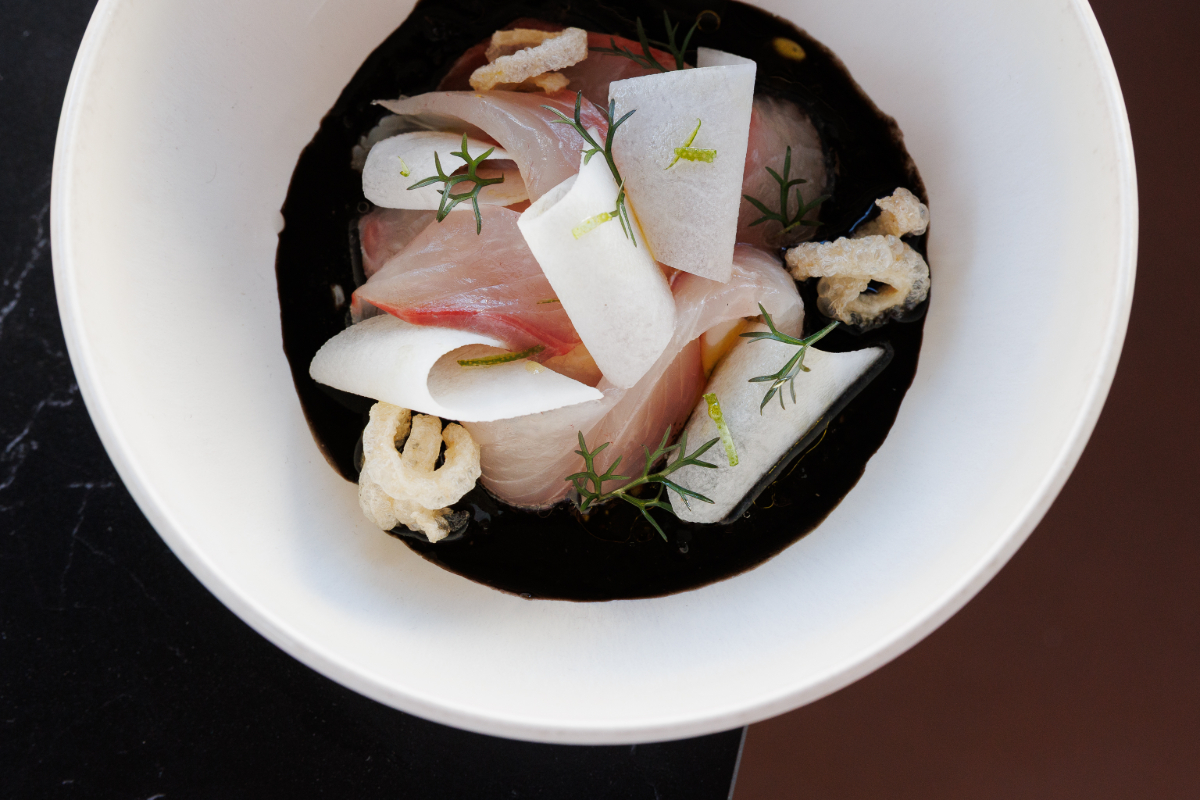
Starters will include grilled oysters with sauces like encacahuatado and salsa borracha, as well as a range of aguachiles and ceviches that showcase the fresh flavors of the coast. The pulpo enamorado tostada, with a whimsical name that translates to “octopus in love,” will be presented as a salad of grilled octopus, tomatoes, and serrano chiles bound with mayonnaise and served atop a tostada.
In the antojitos section, the menu will include shareable items like the pan de cazuela, a nixtamalized corn cake with glazed pork belly and green papaya escabeche, and the crab tortita ahogada, a small sandwich stuffed with crab, charred pineapple, and serrano chiles, served partially submerged in a guajillo and crab sauce.
The restaurant will have a robust masa program, nixtamalizing local corn and heirloom corn from Mexico in house to make fresh tortillas, as well as tamalitos de maíz with sea urchin and roasted poblano crema or triangular tetelas stuffed with crispy artichokes and mole blanco.
The platos principales section will include some heartier options, like the chicken milanesa, which will be stuffed with queso fresco and poblano, then breaded and fried until golden and crispy. The chochoyotes and mushrooms will be another highlight, with a savory broth made from local mushrooms and studded with masa dumplings, with bone marrow served on the side to add richness and depth.
For dessert, diners can look forward to a coconut and mezcal Baked Acapulco, comprised of a coconut mezcal sorbet, passion fruit, coconut cake, and saladitas (a crispy saltine cracker popular in Mexico). Another must-try is the flan de piña, a roasted pineapple flan topped with spicy salsa macha and a tepache sorbet.
BAR PROGRAM
The bar program, developed by Consulting Bar Director Evan Williams, will look towards the Pacific coast of Mexico through the lens of California. Guided by modern technique and rooted in ancestral flavors, the program will highlight spirits and seasonal ingredients that express a strong sense of place.
What sets the program apart is its expansive focus on the spirits of Mexico. Far beyond tequila and mezcal, the list will draw upon a diverse range of distilling traditions – with spirits like sotol, bacanora, raicilla, and lechuguilla – while also spotlighting the diverse expressions of gin and whiskey that are currently being produced in Mexico. Many of these are crafted in small batches, giving the restaurant a dynamic selection that rewards repeat visitors with new spirits to explore.
Sourcing is approached with intention and care, ensuring that spirits are produced with high quality ingredients and a sound ecological plan in place. The team prioritizes working with distilleries that are Mexican-owned rather than simply operating in Mexico. Focus is given to women producers whenever possible.
The cocktail menu will be grounded in nostalgia, leaning into flavor memories that resonate with people who have roots in California and/or Mexico. Though the bar will maintain a strong emphasis on technique, with fermentation, clarification, and force carbonation all playing a role, the guest experience will remain approachable for those who simply want to enjoy a well-balanced beverage.
The Truchita, or little trout, draws inspiration from both the Paloma, a classic combination of grapefruit soda and tequila, and the Salmoncito, a cocktail made with gin, grapefruit juice, campari, and tonic that has become a staple in Mexico City. With a papaya seed-infused blanco tequila, clarified grapefruit skin cordial, Granada Vallet, and lime, the cocktail will be fruity and carbonated, with a strong bitter backbone.
The Más Sabe el Diablo seeks to capture the pleasure of consuming many al pastor tacos in one sitting. This smoky and herbaceous milk-washed cocktail will combine sotol with a caramelized pineapple cordial flavored with achiote, cilantro, mint, basil, and serrano; and a Yellow Chartreuse infused with chicatanas, smoky and nutty edible ants that are a seasonal delicacy in Mexico.
Ser un Sol will be a bright and refreshing carbonated cocktail that, while remaining approachable, tells a deeper story. The featured spirit will be pox – a ceremonial Mayan liquor that remains popular in southern Mexico – infused with whole cacao beans, and accented with ingredients from the region, like clarified guava, marigold and chamomile amaro,
The margarita selection will be treated with the same care as the rest of the cocktail menu. Seeking to capture the ideal expression of the drink, the team will emphasize quality spirits and seasonal ingredients, using the margarita as a flexible canvas that can capture the vibrant, ever-changing flavors of the farmers market.
The menu will also include a selection of chocolate drinks, such as chilate, a cold beverage combining cacao, rice, cinnamon, and corn from Guerrero. These will be spirit-free, with the option to add alcohol if desired.
WINE PROGRAM
The wine list, curated by Wine Director Jerry McGie, will focus on the deeply soulful wines of California, Mexico and South America. These parts of the world have seen an extraordinary rise in talented winemakers who honor tradition while breaking new ground.
Though wines from the latter two regions are not very widely available in the United States, they have the structure and nuance to rival selections from regions with much longer lineages. “These wines have a spirit all their own,” explains McGie in a statement. “They tell their own story, and they deserve to be discovered, shared, and enjoyed.”
The bottle list, at around 80 selections, will be broken down into thirds across California; Mexico, with a focus on emerging regions such as Baja California and Querétaro; and South America, with an emphasis on Chile and Argentina. These are complemented by a small selection of benchmark bottles that represent some of the most compelling winemaking from around the world.
Winemakers such as François Raveneau, Egon Müller, BOND, and Domaine De La Romanee-Conti will fill out the luxurious offerings on the small list, while surprise producers such as Zuccardi, Laberinto, Garage Wine Co., and Jardin de Hormigas will be sure to delight guests with their high performing and nuanced wines. For example, the Jardin de Hormigas ‘Los Amantes’ 2022 from Uco Valley, Argentina is a thoughtful, terroir-driven, high elevation Malbec. Made from an extremely small plot of vines, it’s aged for nearly two and a half years before release. The result is a wine that offers both power and finesse, in contrast to the overly oaked expressions commonly associated with the varietal.
The opening by-the-glass list will showcase the winemaking talents of female producers from these three main regions. It will feature 15 selections – five whites, five reds, one orange, one rosé, and three sparkling wines – all made by women.
Guests can look forward to tasting the “Aniversari” Zinfandel 2023 from Silvana Pijoan of Vinos Pijoan, who is quickly becoming one of the most compelling winemakers in Mexico. McGie’s close relationships with producers also made it possible to serve several wines that have never before been poured by the glass in restaurants, such as Cattleya’s “The Temptress” Chardonnay 2021, from Bibiana Gonzalez-Rave, who was born and raised in Colombia, and set her sights on becoming a winemaker at the age of 14, ultimately working at some of the best wineries in France. The Nid Tisse “Radian Vineyard” Pinot Noir 2023, a highly sought-after, limited production bottling, is similarly available by the glass exclusively at Maria Isabel.
Maria Isabel’s selections also reflect a broader commitment to discovering up-and-coming producers and sharing their talents with new audiences. Several winemakers on the list are pouring in restaurants for the first time, with one example being the striking Rosé of Grenache 2024 made by Cecy Castillo of Mi Casa, a first-generation winemaker of Mexican heritage who McGie first met at a tasting event in Santa Barbara County.
DESIGN
The design for Maria Isabel is inspired by two women – Laura’s sister, Maria and her mother, Isabel. Jenne Wicht of JAK W imagines the two of them as very different, but complementing elements of the feminine archetype. Maria, represented in the North Dining Room, is the light, soft, ethereal feminine, while Isabel, embodied in the South Dining Room and Lounge, is the rich, grounded, and earthy feminine. Though they initially present as contrasts, the two are in actuality a harmony of opposites. Textures, materials, and textiles repeat in both dining spaces, but are presented in different colors and tones. The result is an environment where diners can choose the experience that best suits their mood.
Color serves as the primary differentiator between the two personalities. The North Dining Room (Maria) is defined by a gentle palette of pink terrazzo floors, cognac leather, and natural oak, creating a bright and welcoming environment. The South Dining Room (Isabel) embraces a moody palette of dark green terrazzo floors, deep espresso, toffee, and dark mirrors. These contrasting shades are unified by shared foundational materials, including neutral granite counters and the earthy and tactile lime plaster from Color Atelier used throughout both spaces.
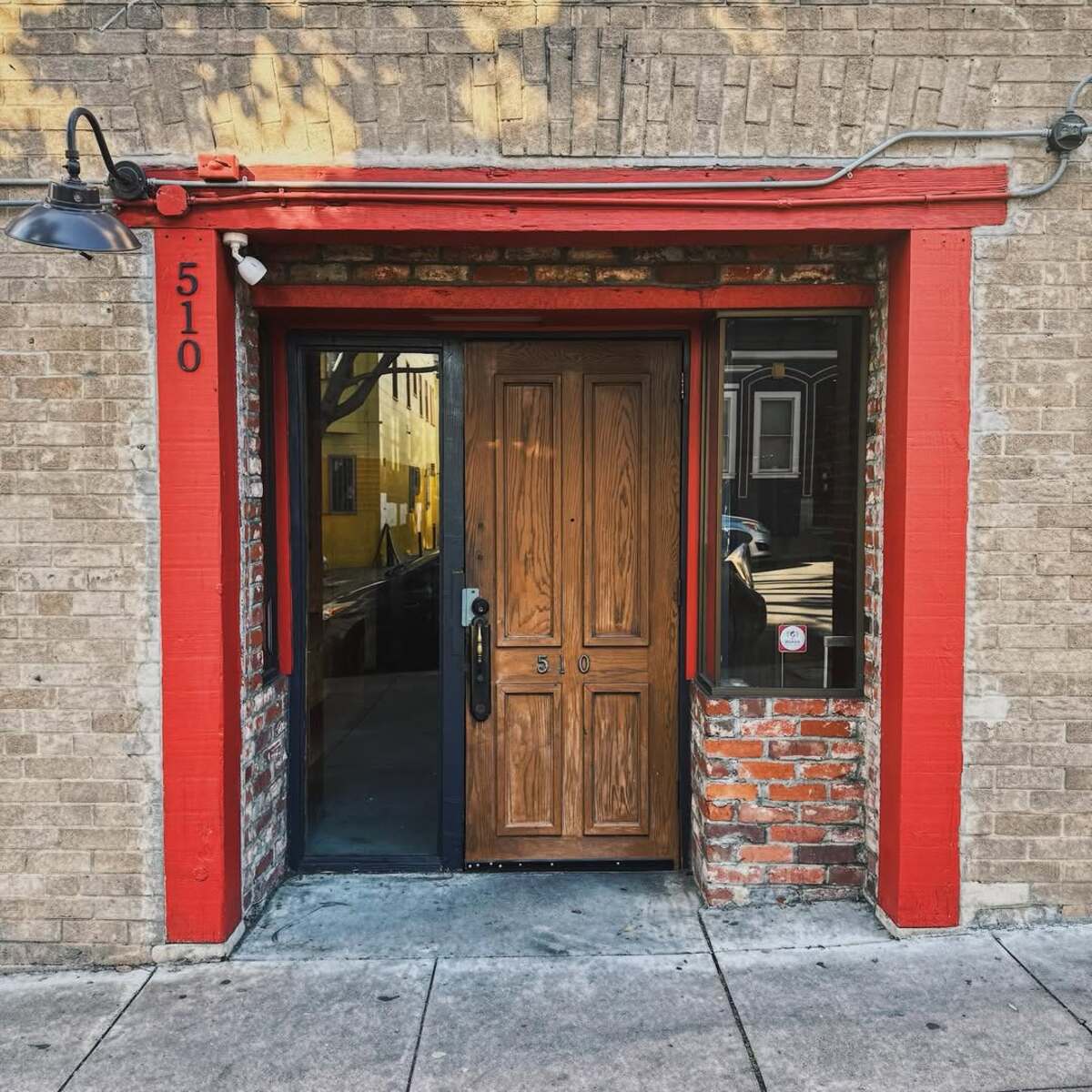
The architectural transition into and between these two worlds is defined by elegant geometry and expert craftsmanship. A custom, 8-foot oak door from Hacienda Doors, hand-carved with the initials M and I, greets visitors before they enter the restaurant, setting the tone for a vibrant and intimate dining experience.
Upon entry, guests are met with a large-scale, hand-painted mural by Emily Parkinson, a local artist who also created the mural and wallpaper at Dalida. Her piece draws heavily from the diverse flora and fauna of Mexico, acting as a vibrant botanical introduction to the space. This organic imagery is echoed in the custom wallpaper in the South Dining Room, ensuring that the artwork serves as a narrative thread connecting the two women and their shared heritage.
Arches are also repeated throughout the space, acting in subtle ways to define transitions and highlight the Mexican hacienda influence. Healdsburg-based artist and craftsman Ray Degischer created the arched bar in the South Dining Room (Isabel), accented by a magical background of flowers and fish from Wall&decò.
The guest experience was designed to be stimulating and vibrant, but also intimate. Consideration was taken with the lighting and acoustics to subtly enhance the guest experience. To balance the energy of the kitchen and bright natural light in the North Dining Room (Maria), the design team installed a custom checkerboard glass steel partition, also crafted by Degischer. The glass is powder coated in a buttery cream to allow light to filter through the dining room and the kitchen, making them feel connected and simultaneously separate.
In the South Dining Room (Isabel), the design team added a bank of mirrors along the east wall to capture the dappled light that filters in through the large windows. Sconces, back bar lighting and pendants were installed strategically to bounce light off of the mirrors and to add drama to the espresso plastered walls. They utilized materials like woven window treatments and coffered ceilings to minimize the noise, ensuring intimate conversation remains possible.
JAK W’s goal was to create a contemporary restaurant with subtle nods to both Californian and Mexican heritage. Great care was taken to select makers with roots in at least one of these two places and capable of using eco-friendly materials to stay true to the vision of the restaurant.