[Editor’s note: The report here is from an inspection conducted on October 22 and may not reflect the food establishment’s future health inspection status.]
The Austin Public Health Department conducted a routine health inspection at Tian Tian Golden Palace Seafood & Dim Sum on October 22.
The inspection report documented several major health and safety code violations, including a lack of hot water supply in the handwashing sinks, cockroach infestation, and improper cooling temperatures for food items. The restaurant received a low score of 67 following the inspection.
WhatNow has reached out to the restaurant for comment and will update the story upon receiving a response.
Tian Tian Golden Palace Seafood & Dim Sum
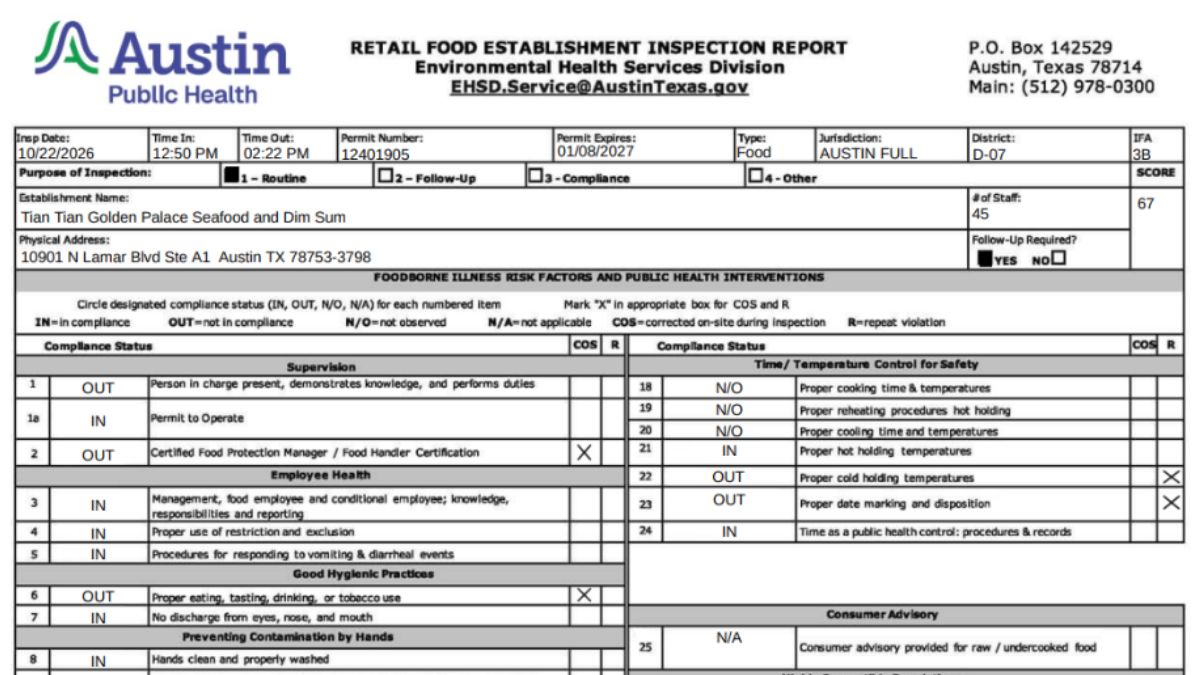
When: October 22, 2026
Where: 10901 N Lamar Blvd Bldg A1, Austin, TX 78753
Score: 67
Tian Tian Golden Palace Seafood & Dim Sum is an authentic Chinese restaurant. Its menu offers fresh dim sum, Peking duck, and premium seafood. According to the inspection report, the violations noted are the following:
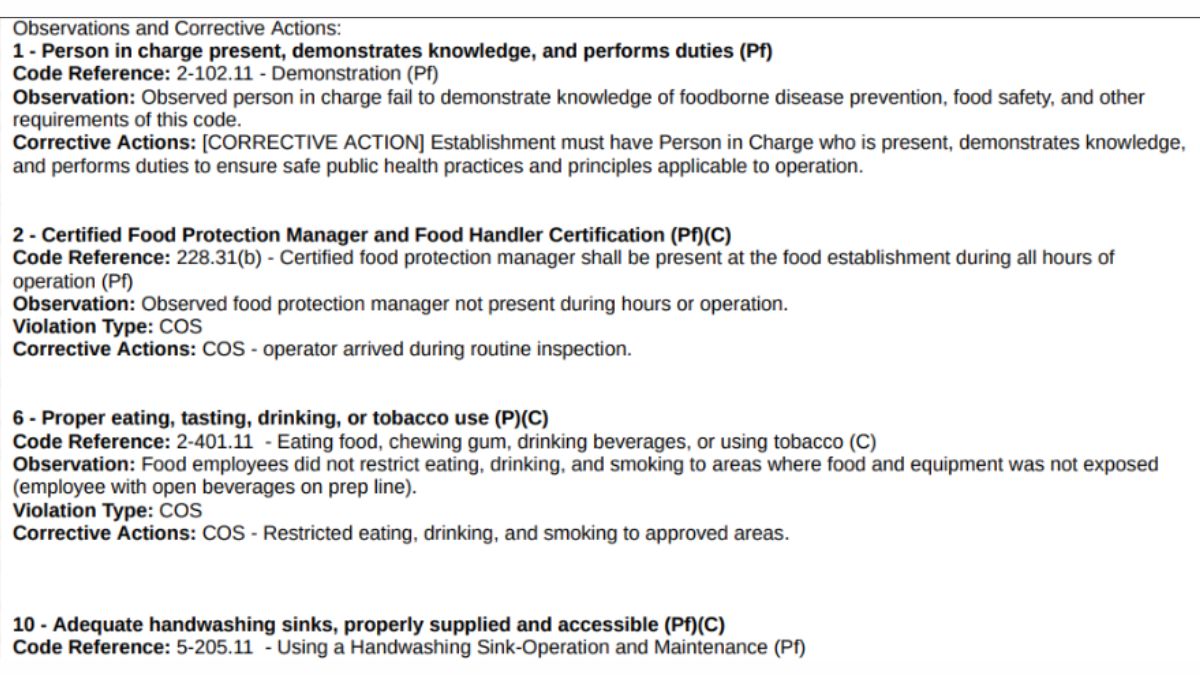
- The official inspection report stated that the restaurant’s PIC failed to demonstrate proper knowledge of food safety and foodborne illness prevention. The report instructed the restaurant that a trained PIC is required to be present at all times of operation and properly follow food safety practices.
- The food protection manager was absent when the inspection began but arrived during the visit.
- An employee had a beverage open on the food prep line. Staff were instructed to restrict eating, drinking, and smoking near food and equipment.
- An inaccessible handwashing sink was found, which was being used to store a dish scrubber instead of for handwashing. The dish scrubber was removed from the handwashing sink immediately.
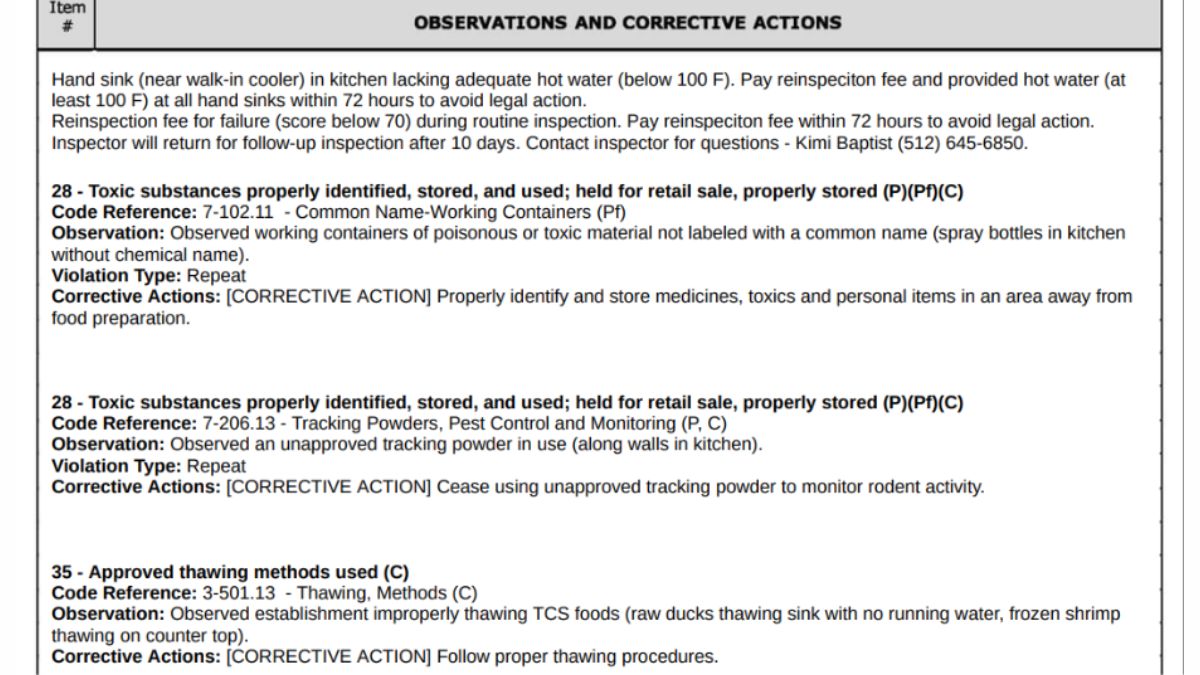
- The hot water temperature was less than 100°F at the handwashing sinks in the kitchen near the walk-in cooler. The staff were advised to provide hot water with a temperature of at least 100°F.
- The back handwashing sink near the 3-compartment sink had no soap available during the inspection. The staff were instructed to provide soap at the handwashing sink.
- The report identified insufficient access to handwashing sinks in the kitchen, including at the cook line near the storage closet. Inspectors advised the restaurant to make the sink near the preparation sink accessible by moving the prep cooler or to install additional sinks near the cooking area.
- During the inspection, dead roaches were found in the oil in the kitchen. The staff were instructed to discard the oil immediately.
- Raw eggs were stored directly above the vegetables in the walk-in cooler. During the inspection, the staff were asked to separate the raw food items from ready-to-eat food and store them properly to prevent contamination.
- Restaurant utensils, including bowls and food containers, were stored as clean but had residue and dead roaches. The staff were instructed to properly clean and sanitize the food-contact surfaces, equipment, and dishware before storing them.
- The report found raw proteins, cooked vegetables, noodles, and bean sprouts stored above 41°F in different areas of the kitchen. The staff were instructed to rapidly cool the food items to 41°F or below during the inspection.
- Cooked proteins and vegetables in the cooler did not have proper date markings. The staff were instructed to mark dates on TCS food items. The spray bottles in the kitchen were also missing proper chemical name labeling. The staff were advised to properly label the bottles and store them in an approved location and away from food items.
- The restaurant was using an unapproved tracking powder along the kitchen walls. The staff were instructed to stop using the powder to monitor rodent activity.
- Raw duck was being thawed in the sink without running water, and frozen shrimp was left on the countertop for thawing. The staff were advised to follow proper thawing procedures.
- The report noted that multiple coolers in the restaurant had no thermometers to measure the temperature. The staff were asked to provide thermometers in the coolers’ warmest part.
- Unlabeled bulk containers were found in the facility. The staff were instructed to provide labels for the bulk food items to identify the contents correctly.
- The report noted dead roaches on the dry storage shelves, and live cockroaches were observed throughout the facility. The restaurant was instructed to eliminate pests and clean and sanitize properly.
- A gap was observed under the kitchen’s back door. The staff were advised to seal the gap to prevent entry of insects and rodents.
- An employee was observed working with raw duck without any hair restraint. The employee was instructed to wear a hair cover immediately.
- The report mentioned that the restaurant was using scoops and utensils without handles for bulk food items. The staff were instructed to use handled scoops and utensils and store the handles out of food.
- Utensils like strainers were observed in disrepair. The restaurant was advised to discard the damaged utensils.
- The reach-in cooler near the mechanical dish was not working properly and failed to maintain the ideal temperature of 41°F or lower. The temperature was adjusted to 41°F during the inspection.
- Accumulated buildup of dirt and debris was found in the prep coolers and storage shelves during the inspection. The staff were instructed to clean and maintain the affected areas.
- The report also noted that wastewater was leaking from the dishwashing sink, and the three-compartment sink was not properly draining and was leaving used water on the floor. The staff were instructed to repair the plumbing and ensure proper wastewater disposal.
For more information, a detailed inspection report is available here.
Follow-Up Inspection
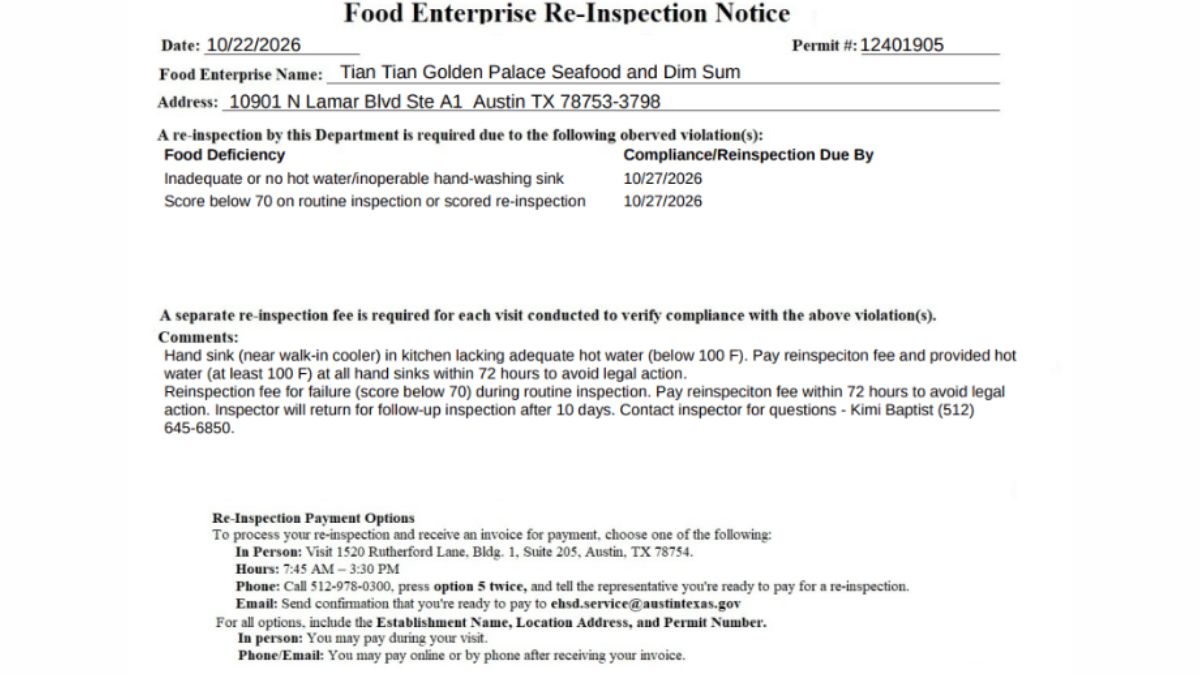
Due to its unsanitary condition, the restaurant received a low score of 67, and a follow-up inspection will be conducted within 10 days.
The restaurant is required to restore the hot water supply (at least 100°F) at all handwashing sinks before the reinspection. A reinspection fee is also required to be paid within 72 hours of the inspection to avoid legal action.