[Editor’s note: The report referenced in this article reflects conditions observed during an inspection conducted on July 2. However, a follow-up inspection was conducted on June 6, and the restaurant corrected all violations.]
The Sacramento Health Department conducted a routine health inspection at Tandoori Fire on July 2. The restaurant received a yellow placard for health and safety code violations. The report cited missing handwashing supplies, improper food-holding temperatures, and unsanitary conditions.
WhatNow has reached out to the restaurant for comment and will update the story upon receiving a response.
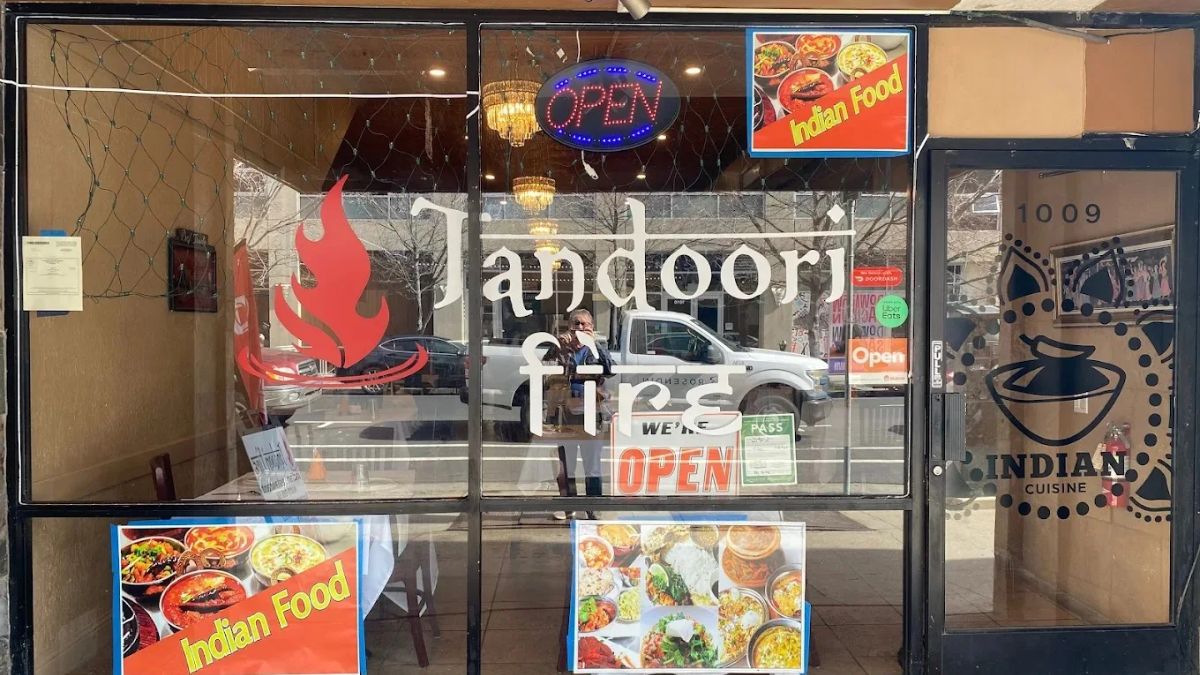
Tandoori Fire
When: July 2, 2026
Where: 1009 9th St, Sacramento, CA 95814, United States
Tandoori Fire is a Sacramento restaurant specializing in Indian cuisine. According to the inspection report, inspectors documented the following violations:
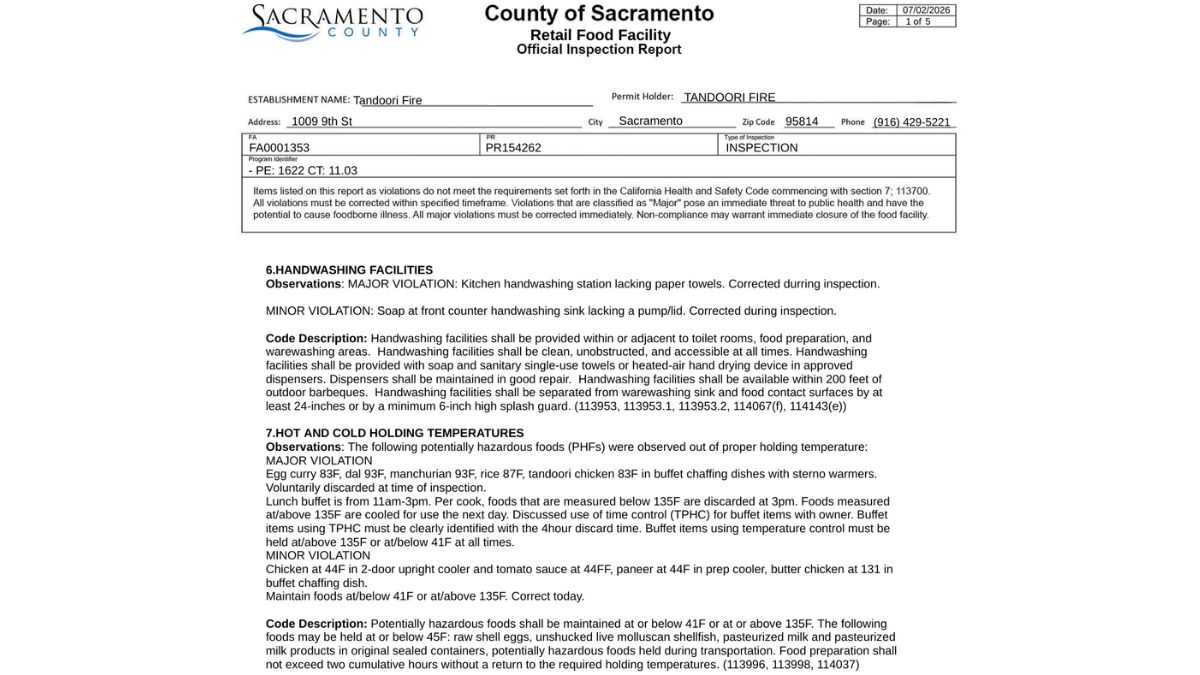
- The report noted that the kitchen handwashing sink lacked paper towels, and the front counter handwashing sink’s soap dispenser was missing a pump/lid. Both handwashing sinks were provided with proper equipment during the inspection.
- The inspection report found several PHFs were not in proper holding temperatures. Food items like egg curry were measured at 83°F, dal at 93°F, Manchurian at 93°F, rice at 87°F, and tandoori chicken at 83°F in a buffet with chafing dishes and Sterno warmers. The staff voluntarily discarded the items during the inspection.
- The restaurant lunch buffet is held from 11 am to 3 pm. According to the cook, the lunch buffet operates from 11 a.m. to 3 p.m., and any food measuring below 135°F is discarded at the end of service.
- According to the report, the inspectors instructed the owner on using time as a public health control (TPHC) for buffet items and reminded staff that temperature-controlled foods must be kept at or above 135°F or at or below 41°F.
- Chicken was stored at 44°F in a 2-door upright cooler, and tomato sauce was at 44°F and paneer at 44°F in the prep cooler. Butter chicken was stored at 131°F in the buffet chafing dish. Staff were instructed to immediately correct the holding temperatures and keep cold foods at or below 41°F and hot foods at or above 135°F.
- The report stated tomato sauce was being cooled improperly in a two-door upright cooler. The sauce was cooked the day prior. The day it was stored in a 5-gallon container, it was measured at 51°F in the center, and on the sides, it was at 44°F. The sauce was voluntarily discarded during the inspection.
- Cooked potatoes stored in a container on a prep counter shelf measured 70°F. According to an employee, the potatoes were cooked 4 hours before the inspection. The room temperature was 79°F, and the potatoes were placed into an upright cooler to finish cooling to ensure the 41°F temperature within 2 hours.
- Rice, cooked 1 hour before the inspection, was stored at 112°F in a hotel pan on the bottom shelf next to the prep sink with a lid on. The staff was instructed to remove the lid for rapid cooling and use approved cooling methods to cool foods from 135°F to 70°F within 2 hours, then from 70°F to 41°F or less within 4 hours.
- The restaurant was thawing frozen sauce at room temperature. The staff was advised to use approved methods to thaw food items immediately.
- Vegetable meatballs were kept in Ziploc bags in the freezer, which were found open with ice buildup. Staff was told to store the bags sealed closed.
- Containers of sauce, fish, and chicken stored in upright coolers were uncovered. The restaurant was ordered to store food with tight-fitting lids or covers immediately.
- Raw fish and raw chicken were kept above ready-to-eat foods in a 2-door upright cooler. The staff was asked to reorganize the cooler according to final cooking temperatures.
- Three bottles of Raid were noted in the chemical storage area under the dish station and were removed during the inspection.
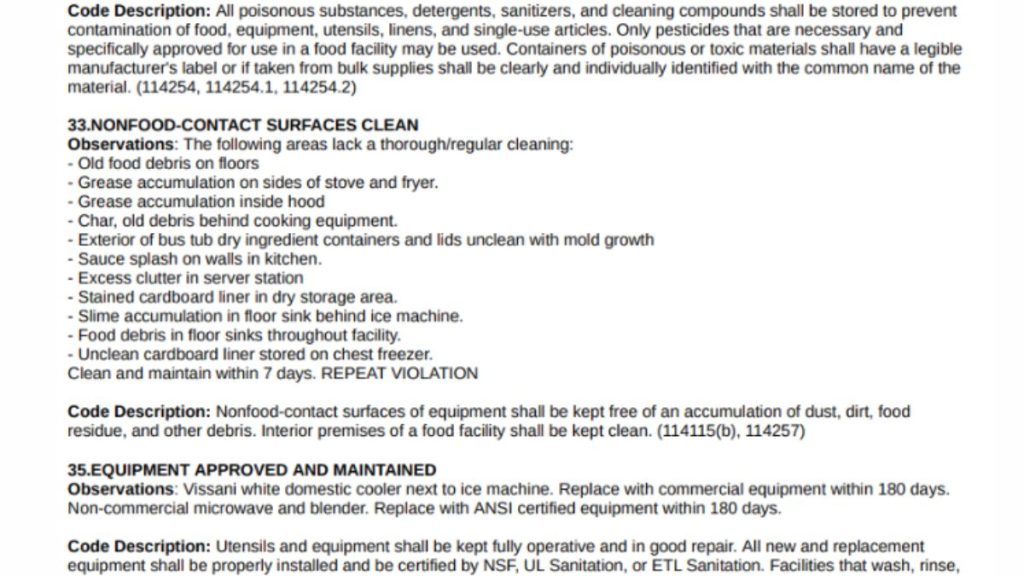
- Several areas in the restaurant lacked cleaning. The report noted old food debris on floors, grease accumulation on the sides of the stove and fryer, and inside the hood. Charred old debris behind the cooking equipment and exterior of bus tubs and dry ingredient containers had unclean lids and mold growth.
- The walls in the kitchen had splashes of sauce; excess clutter in the server station, a stained cardboard liner in the dry storage area, and accumulated slime in the floor sink behind the ice machine were found.
- The report also noted food debris in the floor sinks throughout the facility, and unclean cardboard liners were stored on chest freezers. The staff was instructed to clean and maintain the facility within 7 days.
- The restaurant had kept a Vissani white domestic cooler next to the ice machine. The restaurant was instructed to replace it with commercial equipment within 180 days. A non-commercial microwave and blender were also noted. The restaurant must replace the products with ANSI-certified equipment within 180 days.
- Boxes of single-use containers and napkins were stored on the floor and are required to be stored 6 inches off the floor immediately.
A detailed inspection report is available here.
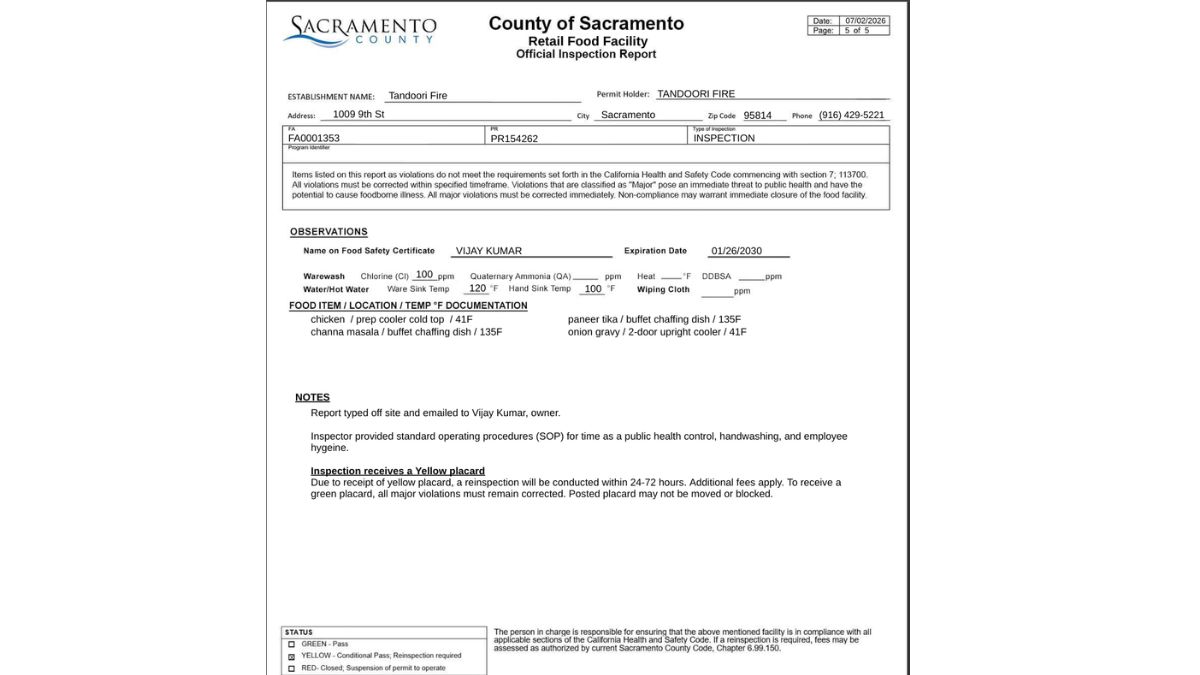
According to the report, the restaurant was issued a yellow placard for the restaurant’s unsatisfactory condition. A reinspection will be conducted within 24-72 hours. The restaurant must correct all major violations to pass the follow-up inspection and receive a green placard.
Follow-Up Inspection
The Sacramento Health Department conducted a follow-up inspection at Tandoori Fire restaurant. According to the July 6 reinspection report, the restaurant has corrected all major violations. A detailed inspection report is available here.